
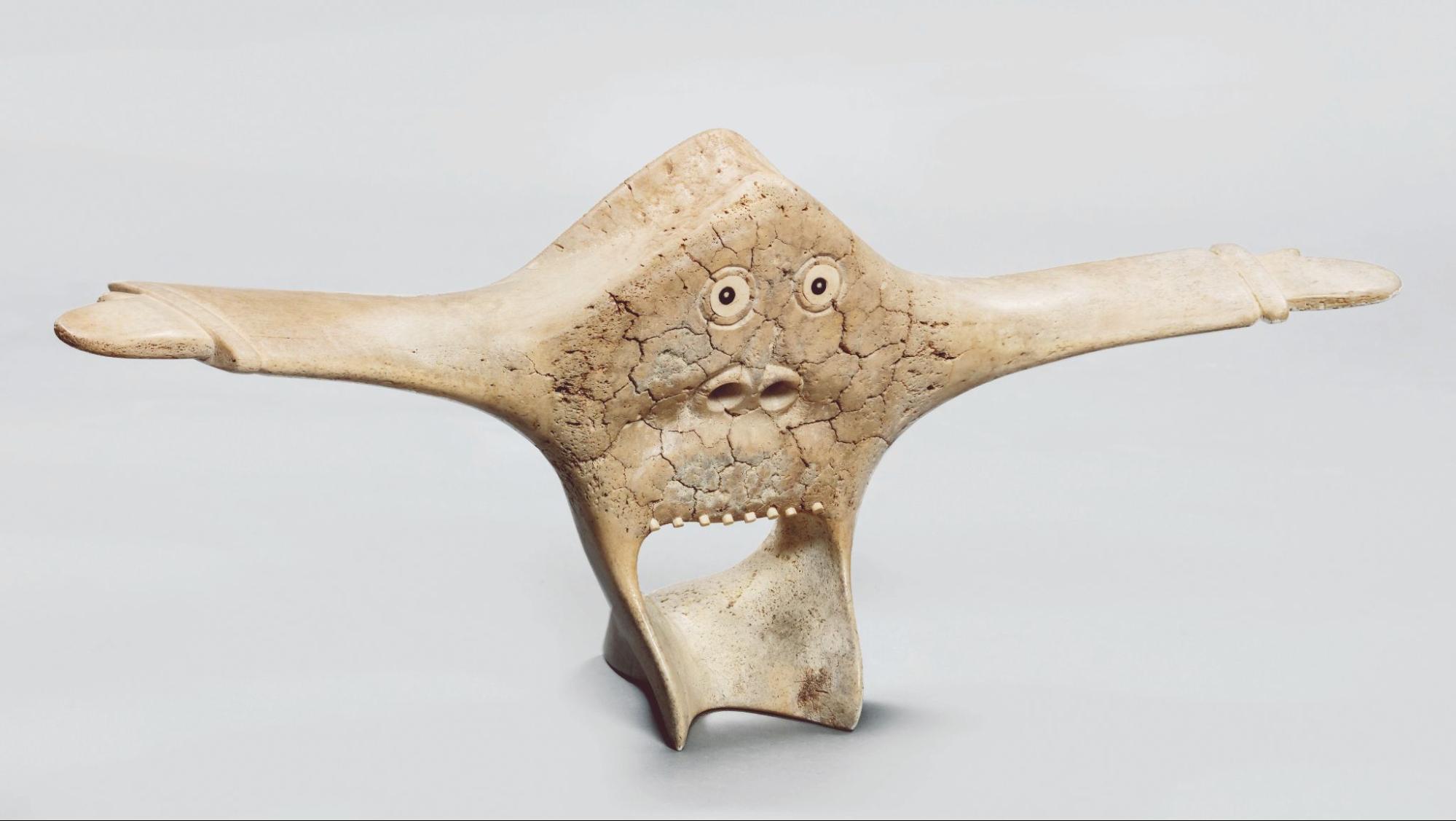
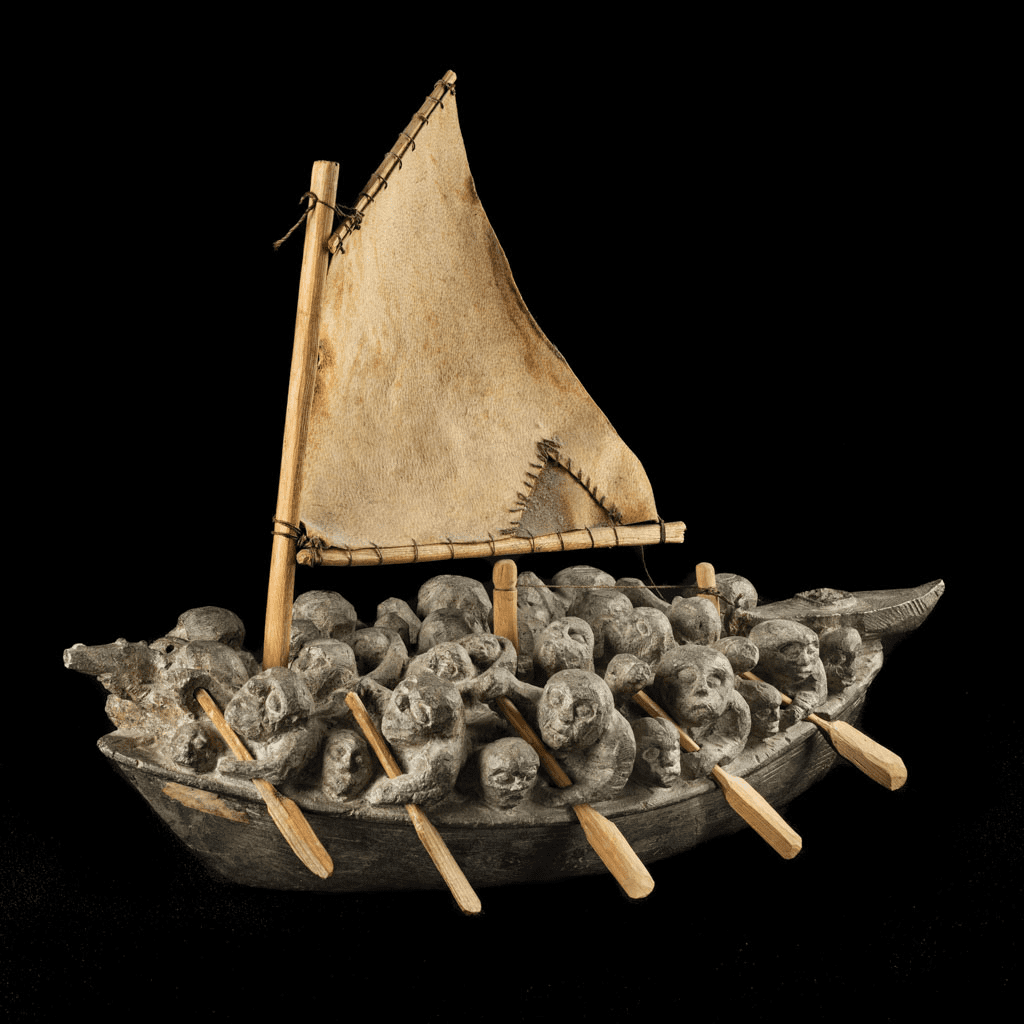
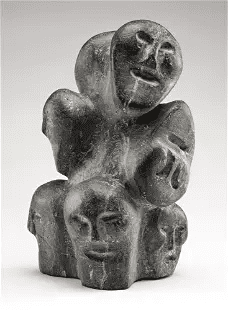
Karoo Ashevak (1940–1974), Netsilik whalebone sculpture — representative of mid-century Inuit carving from the Kitikmeot region.
Guide
Top 12 Inuit Artists You Should Know
A reading guide for collectors — from Kenojuak Ashevak to John Tiktak
Have a piece you're thinking about selling?
Overview & Entries
Inuit Art at Auction
From intricately carved sculptures to vibrant prints, each piece of Inuit art tells a story of tradition, connection to the land, and the resilience of a people who have thrived in some of the world’s harshest environments. This guide introduces twelve artists whose work is widely recognized at auction.
Inuit art spans sculpture (historically walrus ivory, then soapstone from the 1950s onward), textiles in fur and skin, and printmaking — the latter introduced when James Archibald Houston traveled to Cape Dorset in 1949 with printmaking supplies and helped establish the cooperatives that still operate today. Art has long served Inuit life as a means of storytelling, preserving cultural heritage, and through utilitarian objects as a form of sustenance.
Today, Inuit art continues to thrive, evolving with contemporary influences while maintaining its deep connection to the land, wildlife, and spiritual beliefs of the Inuit people. Through intricate craftsmanship, vibrant colors, and profound symbolism, Inuit art offers viewers a window into a culture that celebrates resilience, creativity, and profound respect for the natural world.
01 · Kenojuak Ashevak
Inuit · 1927–2013 · Cape Dorset
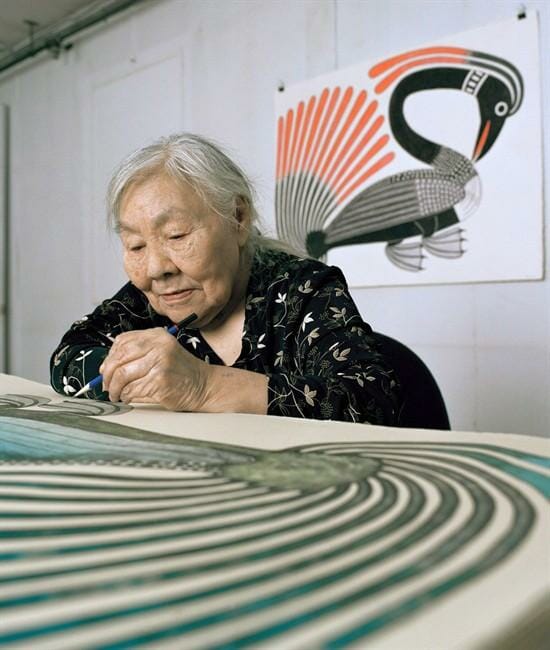
Born on the southern coast of Baffin Island, Ashevak lived with her two siblings, mother, and father Ushuakjuk — a respected shaman and hunter — until his murder when she was very young. She rose to prominence through carvings and drawings before turning to the prints that became her most prized works.
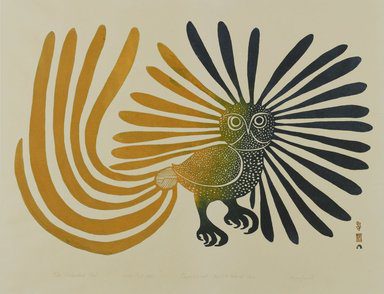
Her stonecut The Enchanted Owl, made through the Kinngait Cooperative (formerly the West Baffin Eskimo Cooperative) in Cape Dorset, regularly exceeds $100,000 at auction depending on condition, provenance, and size. In 1970, The Enchanted Owl was reproduced on a six-cent Canadian stamp — the first time an Inuit woman’s art had ever appeared on Canadian currency.
02 · Jessie Oonark
Inuit · 1906–1985 · Baker Lake
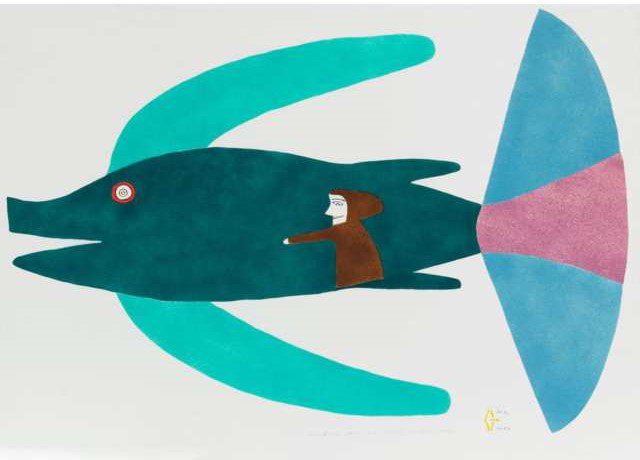
Jessie Oonark was born at Chantrey Inlet, though she and her family lived in Utkusiksalingmiut camps throughout the area before relocating to Qamani’tuaq (Baker Lake), Nunavut after a steep depletion of animals integral to their culture. In 1979, she was forced to end her career when an illness affected the feeling in her hands.
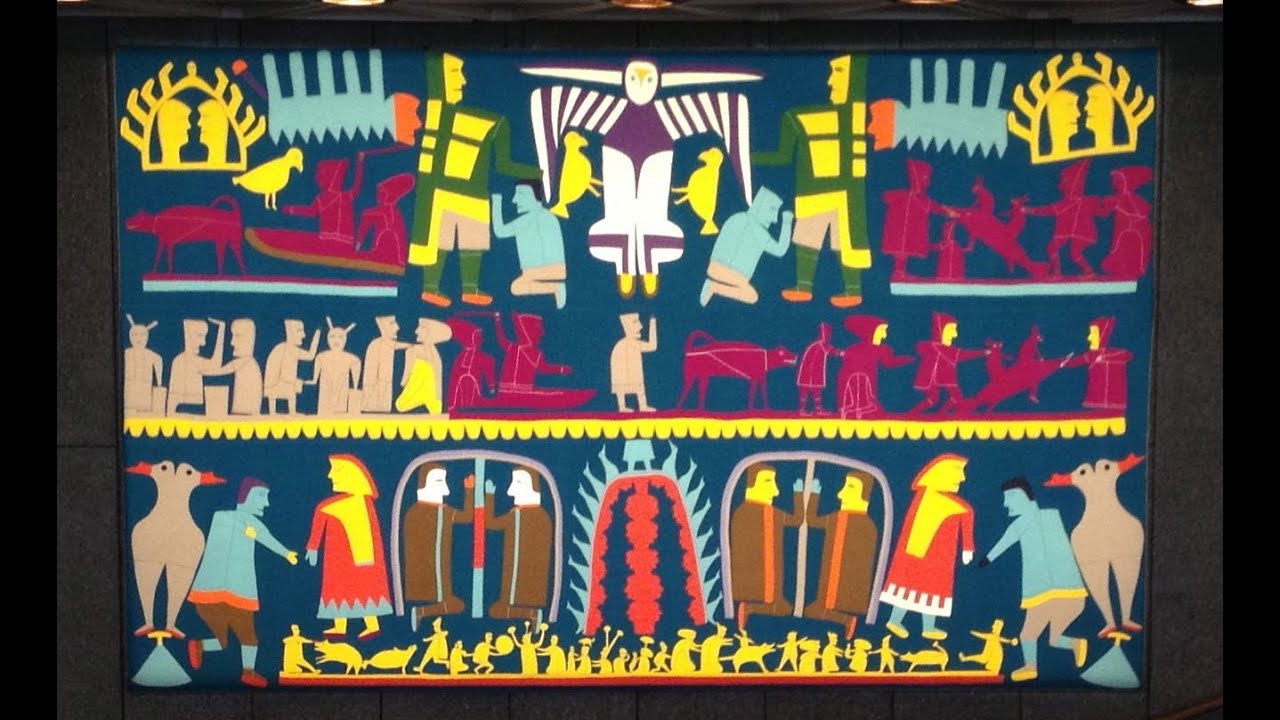
Oonark began her artistic career with drawings, tapestries, and prints depicting people, animals, and other aspects of Utkusiksalingmiut tradition. One recurring icon in her work is the ulu (woman’s knife) — a rounded blade used in many tasks but carrying connotations of femininity and strength. One of her most iconic artworks is an untitled felt tapestry commissioned in 1973 by the National Arts Centre, representing important legends and figures in Inuit culture. Both the rarity and mastery of her textile and tapestry work make them her most valuable category at auction.
03 · Karoo Ashevak
Inuit · 1940–1974 · Kitikmeot, Netsilik
Karoo Ashevak lived and grew up in the Kitikmeot region of Canada as part of the nomadic Netsilik people. He quickly became one of the most iconic Inuit sculptors working in whalebone, but his profound career was cut short at the tragically young age of thirty-four, when he died in a house fire.
Ashevak’s sculptures depicted expressive faces, shamans, and figures from Inuit myth — often emphasizing the nature of the particular whalebones he sculpted with, sometimes highlighting their imperfections and unique characteristics. Due to his brief career, there are very limited quantities of his work.
04 · Nuna Parr
Inuit · b. 1949 · Cape Dorset
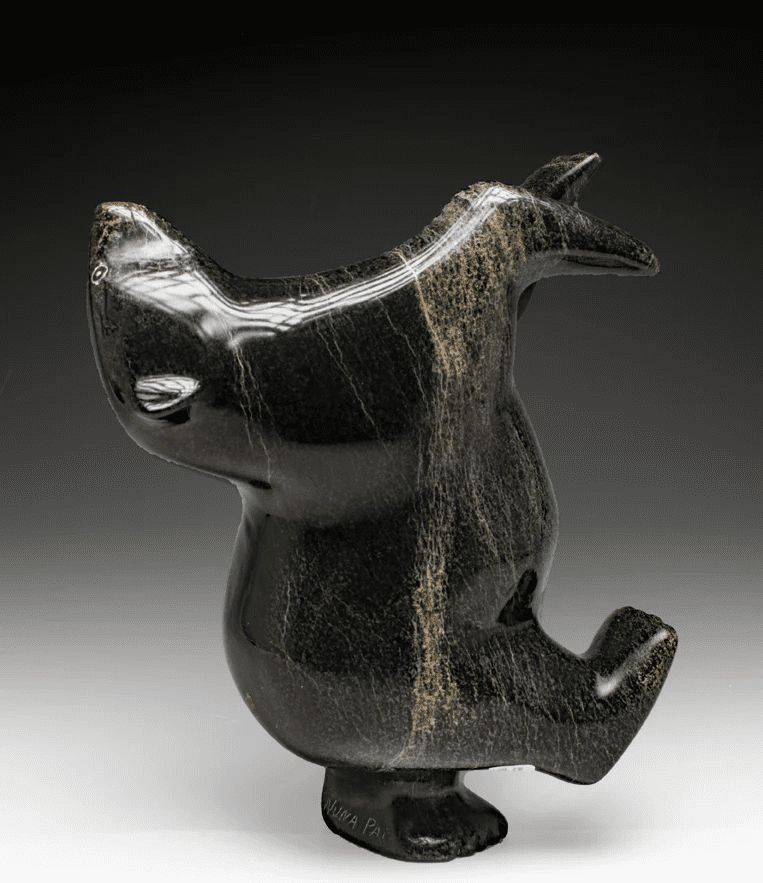
Nuna Parr was adopted by Parr and Eleeshushe, both Inuit graphic artists. The family lived in Cape Dorset among a community of other prolific Inuit artists, which they joined after Parr’s father suffered health problems following a hunting accident. Self-taught from a young age — from a family of artists, living in an artist colony — Nuna derived inspiration from his natural surroundings and Inuit culture and spirituality.
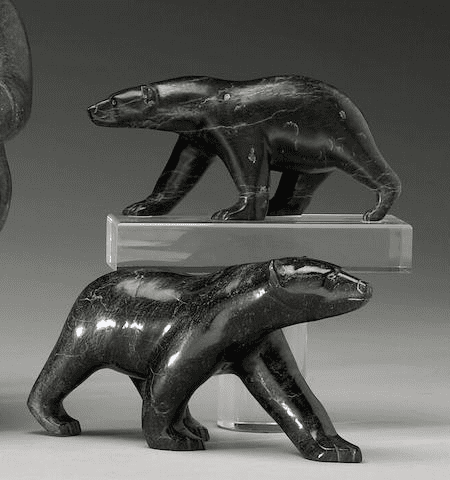
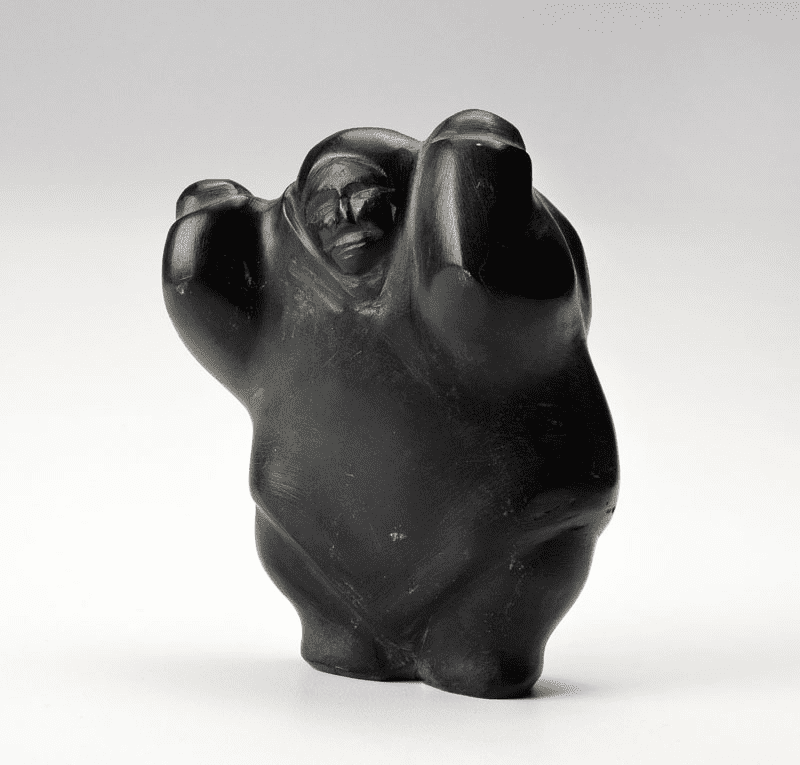
Nuna Parr’s sculptures are primarily rendered in stone, often depicting dancing bears and walruses in sinuous stone forms. He is known for his depictions of animals — walking bears, walruses, narwhals, and other arctic wildlife — and his dancing bears are his most highly sought-after creations.
05 · Pauta Saila
Inuit · 1916–2009 · Baffin Island / Cape Dorset
Pauta Saila was born on Baffin Island, lived in Cape Dorset, and died in Ontario. He began as a graphic artist working in engraving — a craft he learned from his father — depicting arctic wildlife and the natural world he knew through hunting and living off the land. Not much later in his career, he shifted to sculpture.
Pauta Saila was renowned for his iconic soapstone sculptures depicting dancing bears, emblematic of Inuit art. His skillful craftsmanship and ability to capture the movement and spirit of the bears in stone garnered widespread acclaim. At auction, Saila’s sculptures of dancing bears have commanded high prices, reflecting both his mastery and the enduring appeal of the form to collectors of Inuit art worldwide.
06 · Pudlo Pudlat
Inuit · 1916–1992 · Cape Dorset
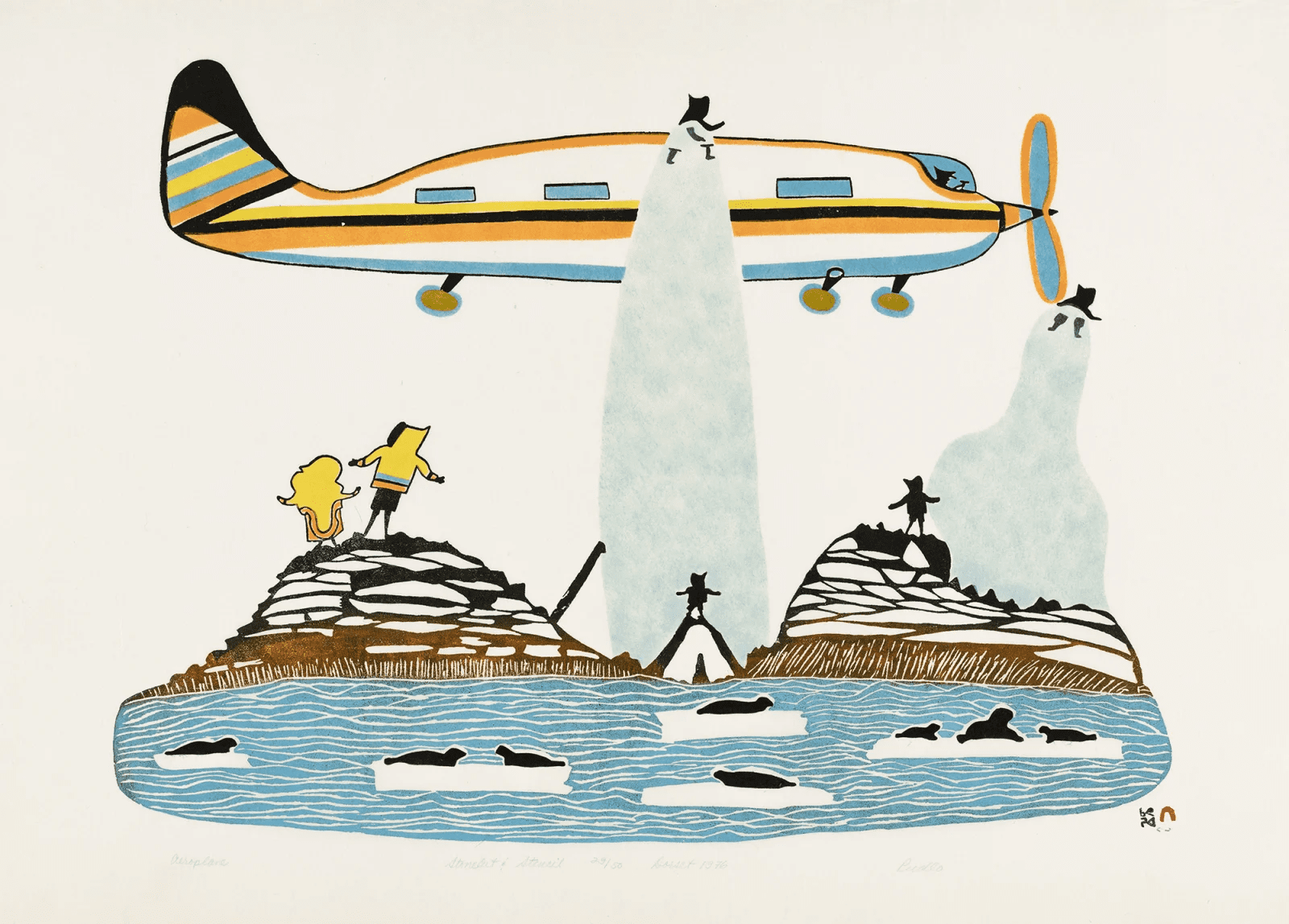
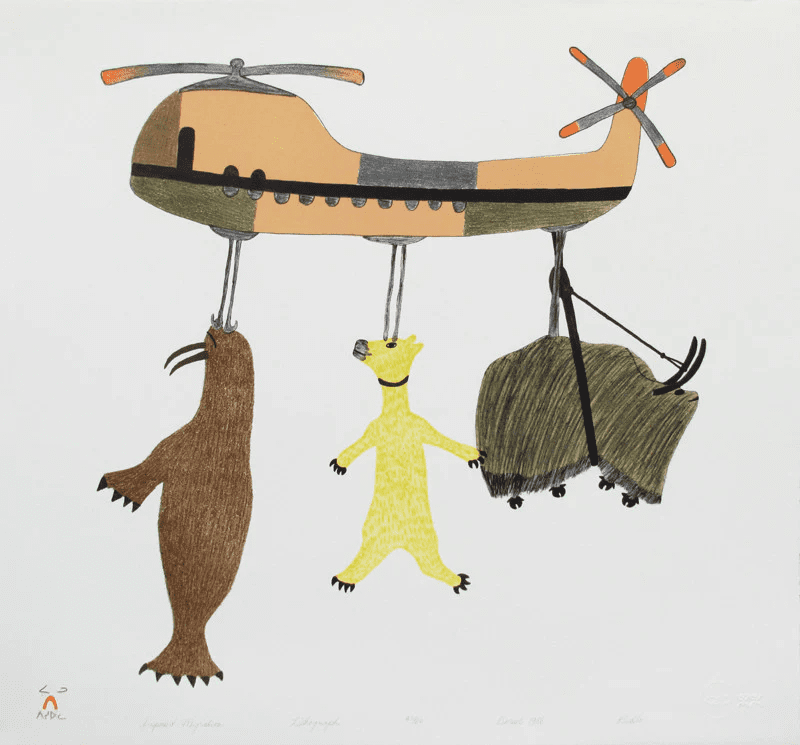
Pudlo Pudlat was a renowned Inuit artist from Cape Dorset celebrated for his captivating prints and drawings depicting arctic wildlife, landscapes, and traditional Inuit life. Born in Coral Harbor, Pudlat moved to Cape Dorset and began his artistic career in the late 1950s when he met James A. Houston. He swiftly gained recognition for a unique style characterized by bold lines and vibrant colors. His work often portrayed a deep connection to his Inuit heritage, offering insights into the spiritual and cultural significance of Inuit life.
Pudlat’s artwork often incorporated elements of humor — particularly his depictions involving planes and helicopters — infusing arctic scenes with playful, whimsical touches. His ability to weave humor into his work added depth and accessibility, inviting viewers to engage with the rich narratives of Inuit culture with a sense of joy and levity.
07 · Osuitok Ipeelee
Inuit · 1923–2005 · Cape Dorset
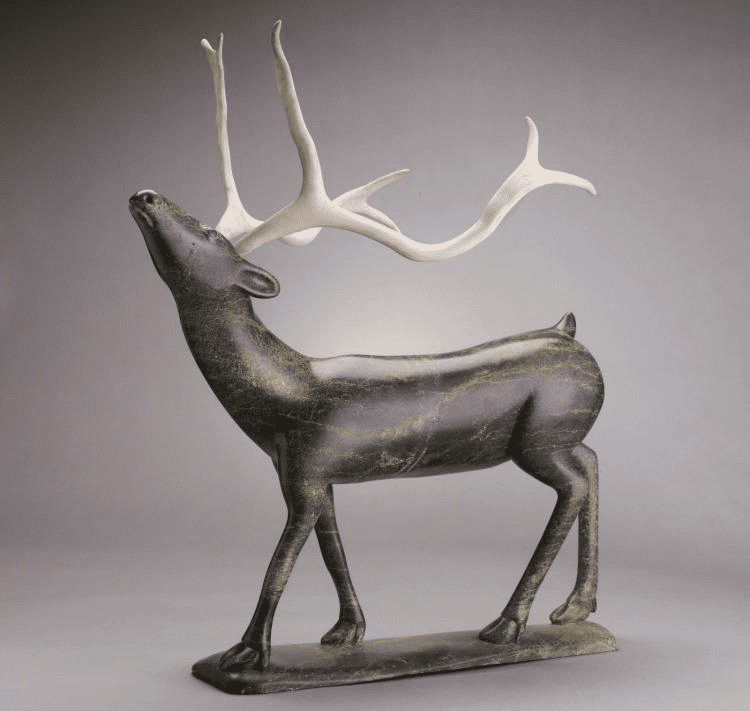
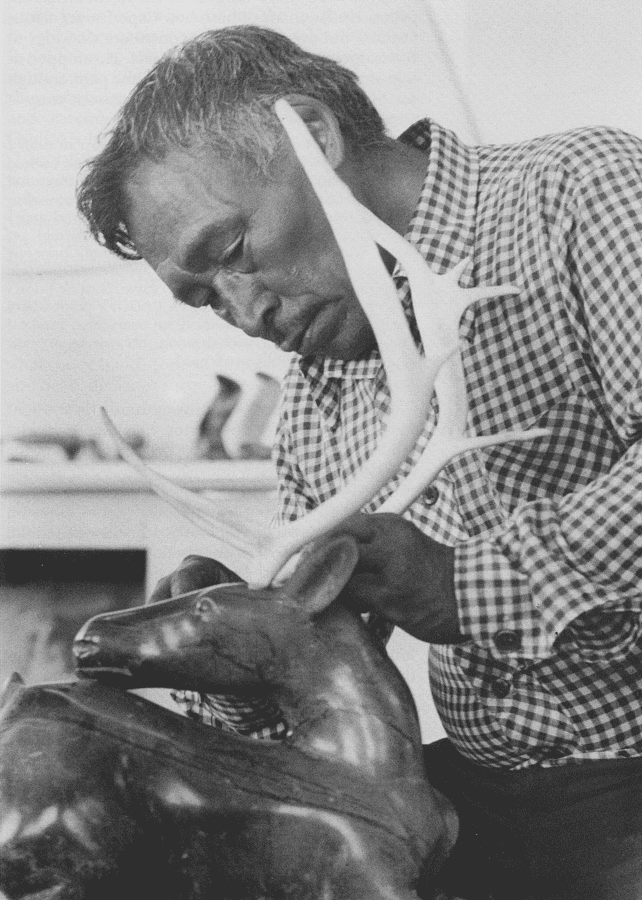
Osuitok Ipeelee was born and lived in Cape Dorset, known for his stone carving. Ipeelee began carving at a young age — a skill he learned from his father — and honed his craft on depictions of arctic wildlife and scenes from Inuit mythology. His sculptures, often crafted from serpentine and other local stones, are celebrated for their intricate detail and dynamic compositions.
08 · Joe Talirunili
Inuit · ca. 1893–1976 · Northern Quebec
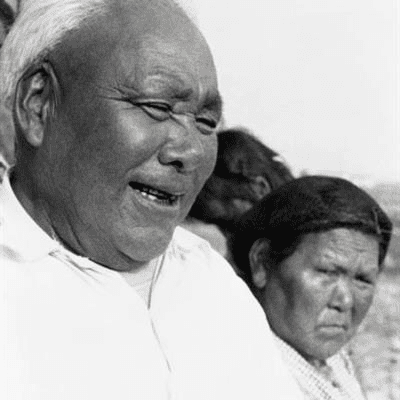
Born near the northernmost part of Quebec, Joe Talirunili became an iconic Inuit printmaker who also worked in sculpture. He suffered immense trauma as a young child when the Inuit community his family was part of became stranded on a treacherous, swiftly deteriorating ice floe during a migration — several in the community perished. The incident’s impact informed art throughout his career, as did the natural world and arctic landscape. Of Talirunili’s work, his migration boat sculptures are the most prized.
09 · Henry Evaluardjuk
Inuit · 1923–2007 · Nunavut
Henry Evaluardjuk was known for his intricate carvings and prints. Born in Nunavut, Evaluardjuk’s upbringing in a traditional Inuit community deeply influenced his artistic style and subject matter. He primarily worked with soapstone, creating sculptures that reflected his connection to the land and its wildlife. Evaluardjuk’s prints, often featuring scenes from Inuit folklore and daily life, also gained acclaim for their intricate detail and storytelling.
10 · Barnabus Arnasungaaq
Inuit · 1924–2017 · Baker Lake
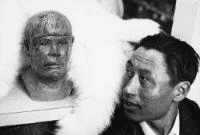
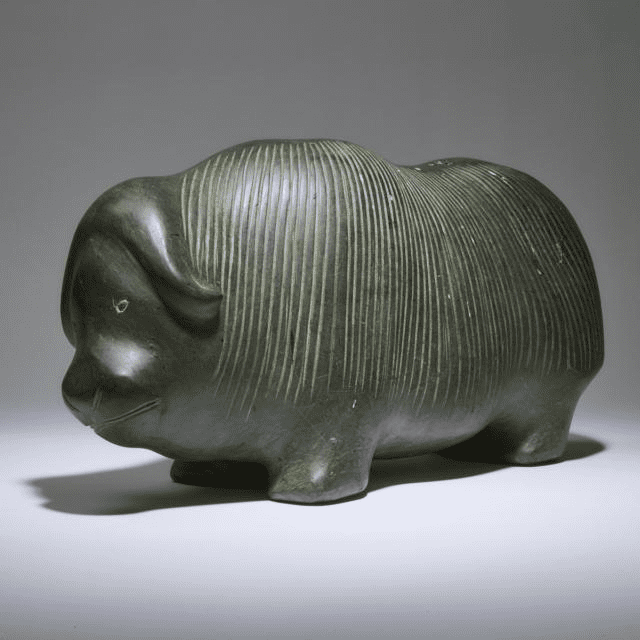
Barnabus Arnasungaaq was born and raised in Baker Lake, where he lived with his wife Fanny Arngnakik — also a printmaker and carver — and his two children, who became sculptors in their own right. Arnasungaaq began his artistic career as a printmaker in the iconic Baker Lake community of Inuit artists; however, he is most well known for his sculptures.
Arnasungaaq’s sculptural work is typically fashioned out of black soapstone in a distinctive blend of realism and abstraction. Musk oxen are his most prolific subject.
11 · David Ruben Piqtoukun
Inuit · b. 1950 · Northwest Territories
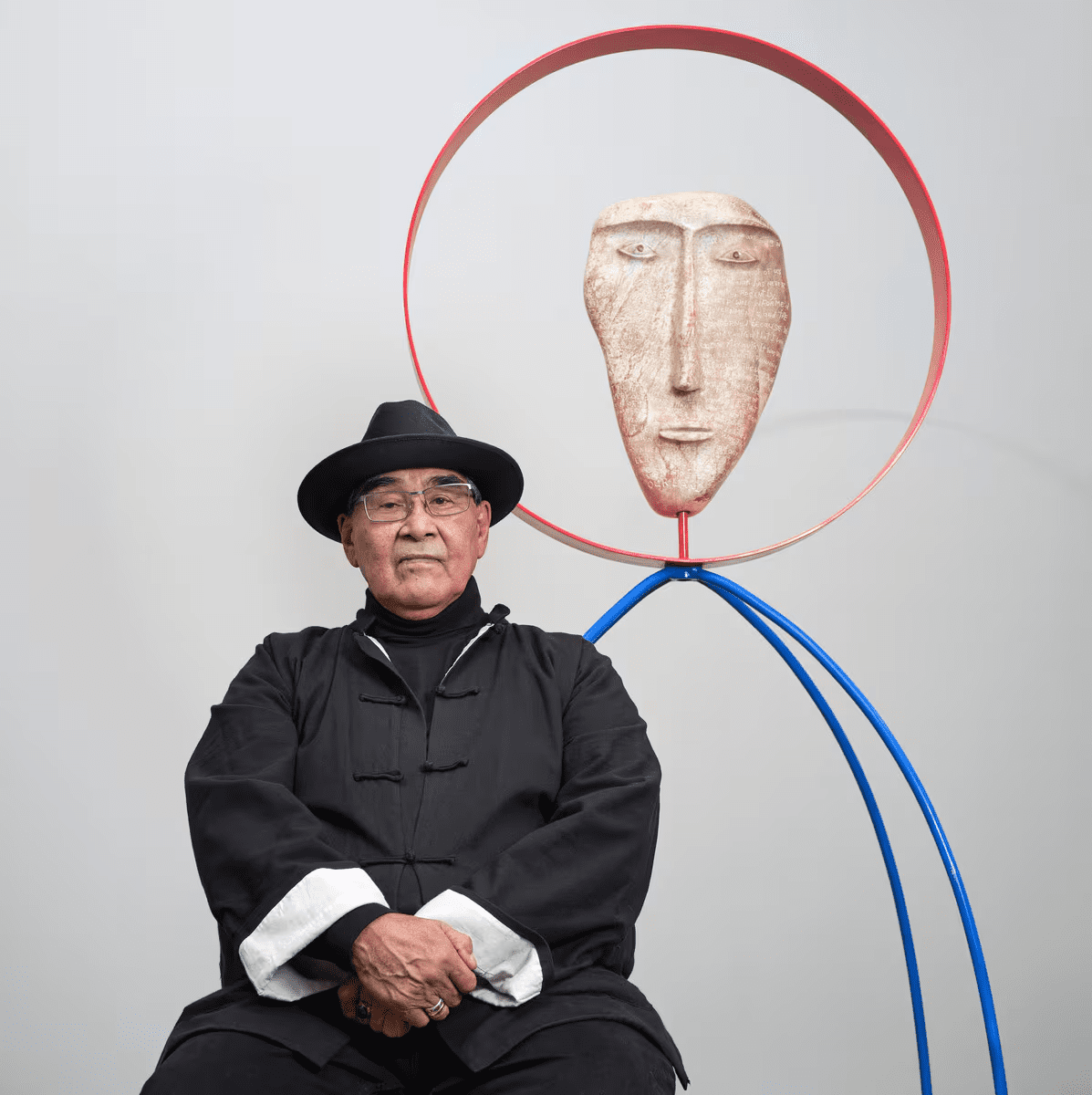
David Ruben Piqtoukun lived with his parents and fourteen siblings in a traditional Inuit community until the age of five, when he was sent to a residential school. The experience was painful for him; he describes it as a “tumultuous upheaval of identity.” In his early twenties, his brother — who had studied sculpture — introduced him to the artform.
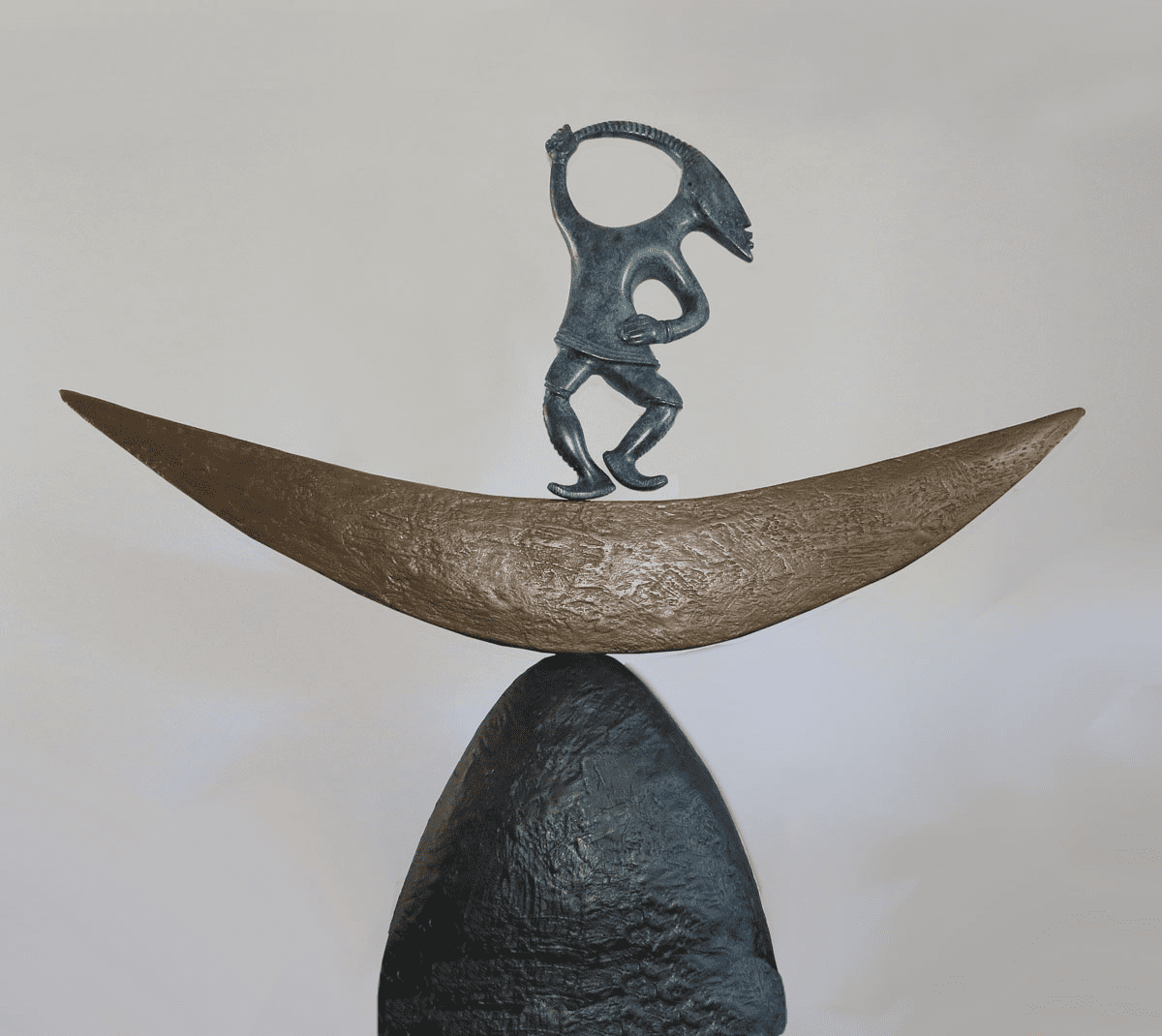
Piqtoukun incorporates shamanic imagery into his art and grapples with themes of social issues in Inuit communities, including drinking, suicide, and the church. As he contends with these subjects, he primarily works in soapstone, sometimes incorporating elements composed of other mediums like sheet metal.
12 · John Tiktak
Inuit · 1916–1981 · Padlermiut / Rankin Inlet
John Tiktak grew up in Arviat, NWT in a Padlermiut community. As an adult, he moved to Rankin Inlet to work in a nickel mine, though he began sculpting as a hobby in the early 1960s — sometimes selling his work as souvenirs. When the nickel mine ceased operations shortly thereafter, he took up sculpting seriously. His work is typically of groups of figures and shamanistic transformation.
Recent Results at Auction
What pieces in this category have sold for. A representative selection from recent sales.
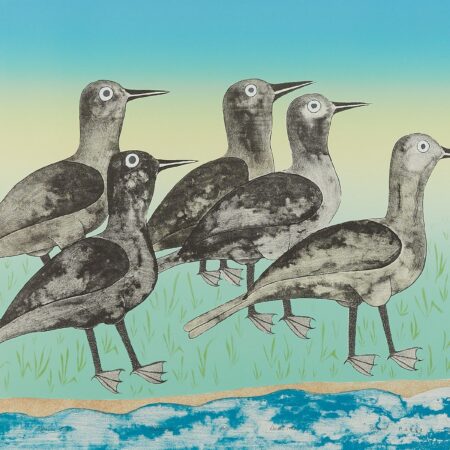
Kenojuak Ashevak, "Attentive Birds" Print
1992
Sold $600
Prices include buyer's premium. Results above ranges typically follow strong provenance.
Get an Estimate
Have a piece in this category you're thinking about selling?
Free, specialist-led estimate in five to seven business days. No fee, no obligation.
Request a Free Auction Estimate →