
Artist Guide
Flora Danica Dinnerware
Royal Copenhagen, Denmark · Commissioned 1790 · Botanical hand-paint on porcelain
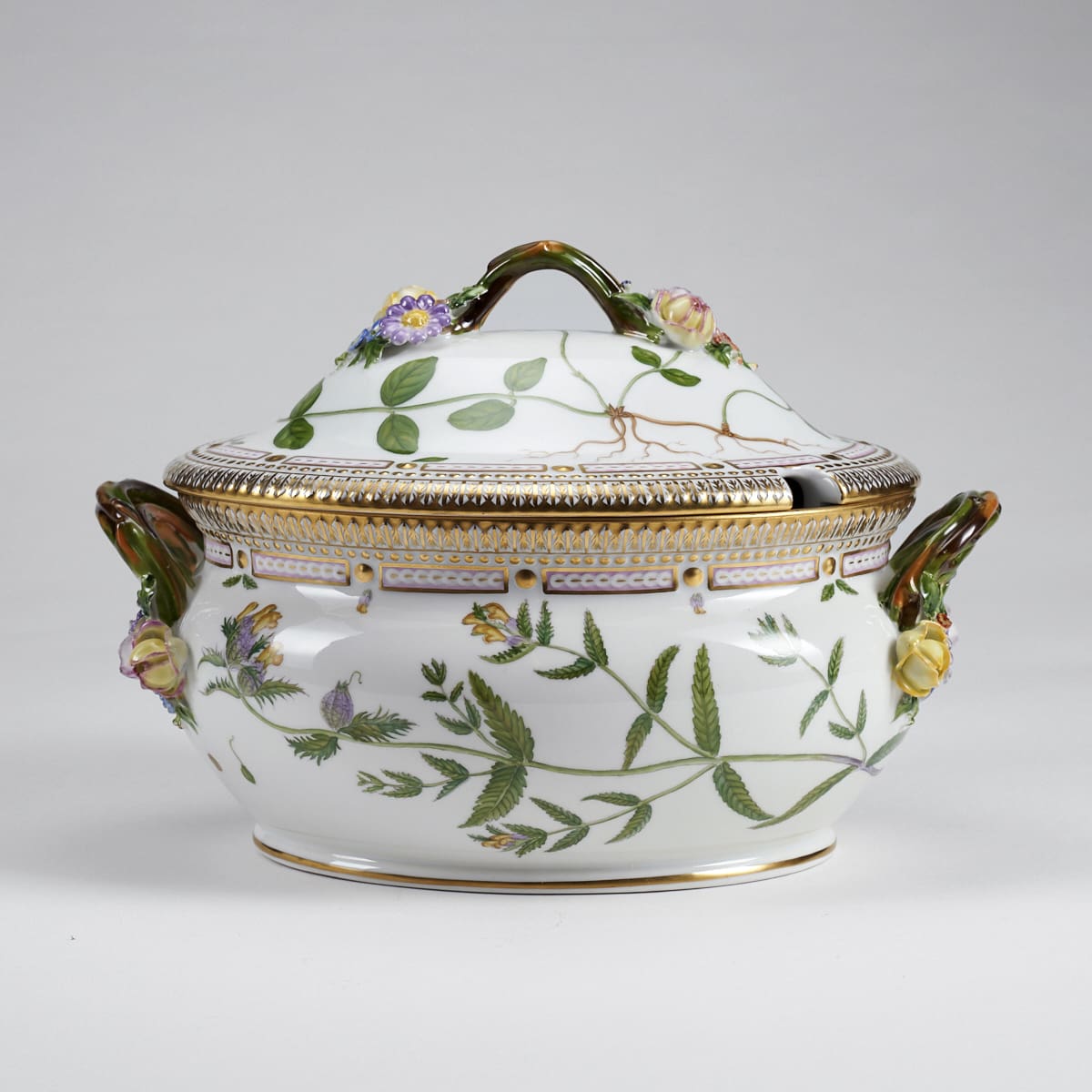
Selling Flora Danica dinnerware?
Biography & Notes
The Value of Flora Danica Dinnerware (Collection Price Guide)
Flora Danica is a series of highly detailed, botanical-themed porcelain dishware produced by Royal Copenhagen Denmark. First commissioned in 1790 by the King of Denmark himself, this line of dishware has an extensive history of unmatched quality and prestige.
What is Flora Danica?
Flora Danica is a limited series of dinnerware pieces produced by Royal Copenhagen. The designs on the porcelain were meticulously copied from Flora Danica, a famous botanical book illustrated with highly accurate copperplate prints of Danish flora. First started by botanist Georg Christian Oeder in 1752, the collection continued to grow for the next 122 years until it contained an astonishing 3,240 floral motifs organized into 51 booklets.
The first series of Flora Danica porcelain was commissioned in 1790 by the King of Denmark and was originally intended as a gift for Empress Catherine II of Russia, a noted collector of fine porcelain. Catherine died in 1796, but the project continued; in 1802 it was finished. After 12 years of work, 1,802 pieces of Flora Danica porcelain were created, mostly by the craftsman Johann Christoph Bayer.
Bayer was selected for this project in part because of his contributions to the Flora Danica print series. He took the accuracy of his work very seriously, and would often send his assistants to the botanical gardens to ask questions or collect samples if he needed additional information on a plant not offered by the copperplate prints he used as reference.
Of the 1,802 original Flora Danica porcelain pieces, 1,530 are still in existence. Part of the collection is still owned by the royal family of Denmark and brought out for certain special occasions. Additional Flora Danica originals can be viewed in the collections of Rosenborg Castle, Christiansborg Castle, and Amalienborg Palace.
What is unique about Flora Danica Dinnerware?
Today, each piece of Flora Danica is still hand-made by skilled artisans who have access to the original Flora Danica source materials as they work. There are fewer than 20 craftspeople in the world qualified to produce Flora Danica — the work requires in-depth knowledge of botany, illustration, and porcelain.
Because of their complexity, each piece is made to order with a floral motif that is both unique and accurate to the source material. Royal Copenhagen has a catalog of 40 porcelain forms and approximately 3,000 floral motifs for the buyer to choose from.
How Flora Danica is produced
The production of Flora Danica dinnerware begins with hand-carving details into the still-wet porcelain after it emerges from the mold. Pieces like the fruit basket and ice bowl require the most intricate carving, but many of the plates and other items include carvings around the border. Next, small flower petals and leaves are sculpted and placed onto the lids and handles of many pieces. The porcelain is rubbed in olive oil to keep it flawlessly smooth.
After the sculpting is finished, the pieces are fired for the first time at 950°C, then glazed and fired again at 1,350°C. This second firing seals the piece and gives it the characteristic glossy white porcelain look.
The pieces are next passed on to the painters, who freehand-sketch the illustrations onto the porcelain. The colors are laid on one at a time, generally moving from the lightest to the darkest. The pieces are fired between each color to ensure no reactions occur between them. By the time they are finished, a single Flora Danica piece will have been fired between 8 and 16 times. Once the painting is finished, gold accents are applied and polished until they shine.
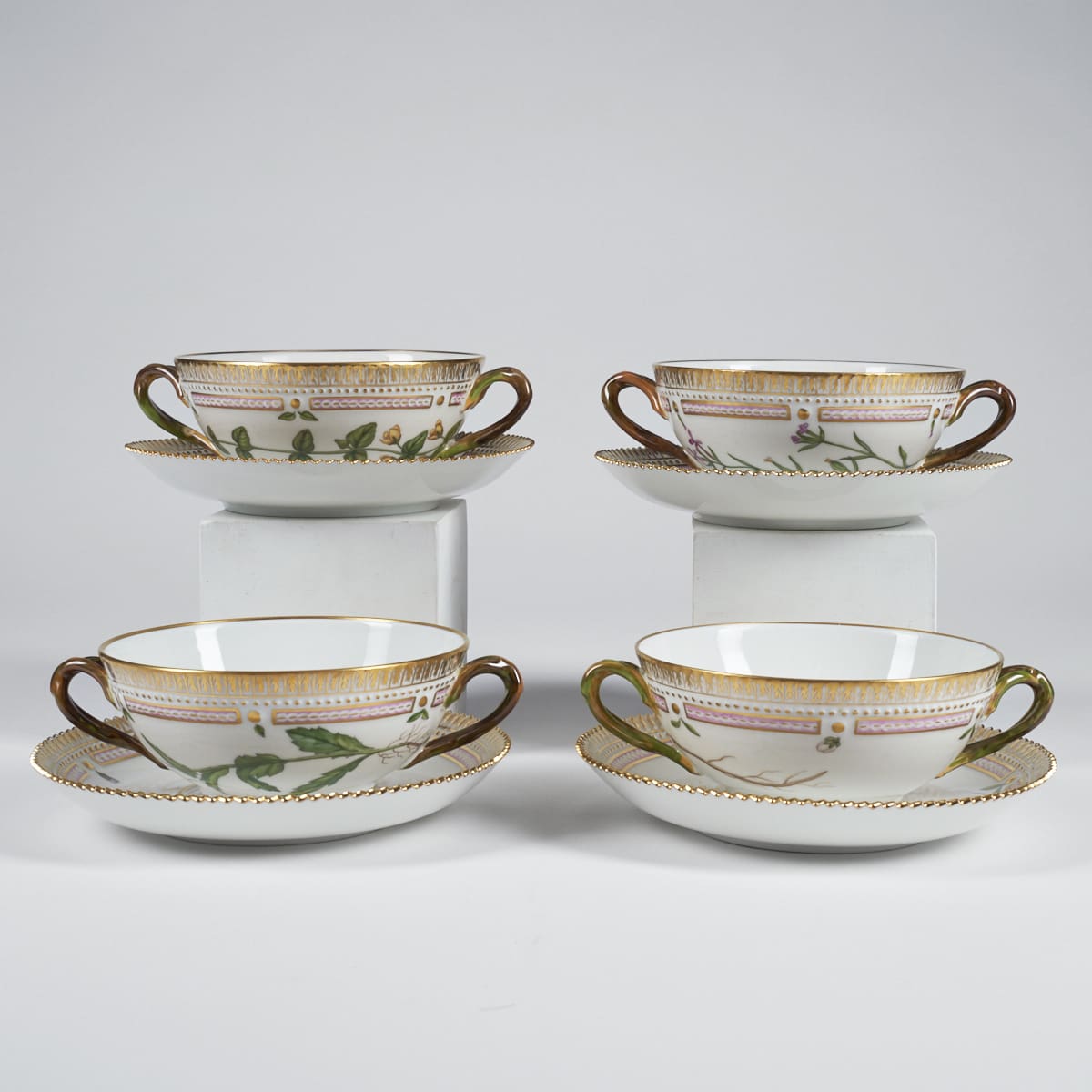
Set of 4 Flora Danica Soup Cups & Saucers, offered in Notable Studio & Art Pottery, Fine & Decorative Art, April 28, 2021.
How much is Flora Danica worth?
The price for a single piece of Flora Danica porcelain typically ranges from $1,000 to $43,000 depending on size, pattern, and complexity. Bowls, plates, cups, and saucers typically cost between $1,000 and $6,000, while more complex items such as fruit baskets, gravy boats, ice domes, and other elaborate serving pieces typically cost between $9,000 and $40,000.
- Individual dishes: $1,000–$6,000
- Complex serving pieces: $9,000–$40,000
What determines the value of Flora Danica?
While Flora Danica is the most expensive dinnerware pattern on the market, some pieces are more valuable than others. Several aspects influence the value of any given piece:
- Function. Serving pieces — sugar bowls, pitchers, gravy boats — are usually worth more than place-setting pieces like plates, bowls, and cups.
- Complexity. Pieces with more ornamentation (complex patterns, cutouts, sculpted flowers) are generally more valuable than less-adorned pieces.
- Motif. Pieces with illustrations of classic Danish flowers tend to be the most popular and collectable. Pieces showing motifs like wild animals or countryside are less common, with a smaller market.
Notable Flora Danica appraisal values
Flora Danica, 10″ Salad Serving Bowl — Convolvulus sepium
A 10-inch-diameter salad serving bowl with gilded details on the rim and a hand-painted illustration in the center of Convolvulus sepium (hedge bindweed / wild morning glory).
- Estimate: $2,200–$2,500
Flora Danica, 18″ Oval Serving Platter — Cirsium arvense
Elegant 18-inch oval serving platter with hand-painted illustrations in the center of Cirsium arvense (creeping thistle / field thistle).
- Estimate: $3,550
Flora Danica, Flat Demitasse Cup & Saucer — Antennaria alpina
A matching cup-and-saucer set with detailed gilded rims and light-green leaf designs modeled after Antennaria alpina (alpine pussytoes).
- Estimate: $920
Flora Danica, Round Custard Cup, Saucer & Lid — Veronica alpina
A beautiful matching set of custard cup, lid, and saucer with gilded rims and handles, and detailed paintings of Veronica alpina (Alpine Speedwell). The handles of the custard cup and lid are adorned with hand-sculpted and painted 3D flowers.
- Estimate: $1,400
How to identify Flora Danica signatures
The bottom of each Flora Danica piece will contain several pieces of information. This includes a Royal Copenhagen Denmark seal, which has a bar above or below certain letters that corresponds to the year of production. The piece will also likely include the 3-letter initials of the painters and gilders who worked on the piece, as well as the full Latin name of the plant represented.
How can I sell my Flora Danica Dinnerware?
The Flora Danica pattern is one of the most valuable dinnerware lines in the world; individual pieces can sell for thousands of dollars in the right conditions. Flora Danica pieces may be sold using online resale sites or through consignment services. However, the most reliable way to sell your Flora Danica is to contact a reputable auction house for a valuation. The auction house can also discuss with you the best way to sell your pieces.
Revere Auctions has expertise in selling Flora Danica at auction for competitive prices. Our experts are ready to help you with any stage — estimate, USPAP-certified appraisal, restoration, or an effortless way to sell. We advertise our sales on more auction platforms than any other auction house in America. If you’re interested in selling with us, please reach out for a free online appraisal.
Recent Results at Auction
What Flora Danica Dinnerware works have sold for. A representative selection from recent sales.
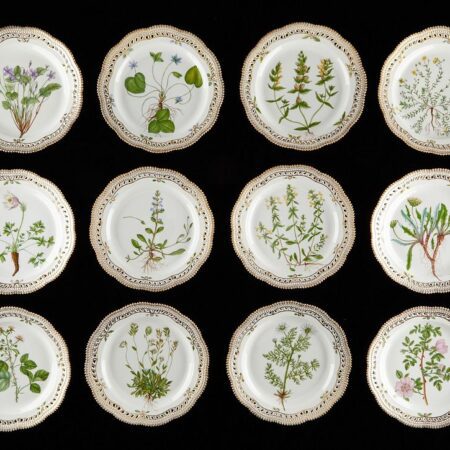
Set of 12 Flora Danica Reticulated Dinner Plates
Sold $9,500
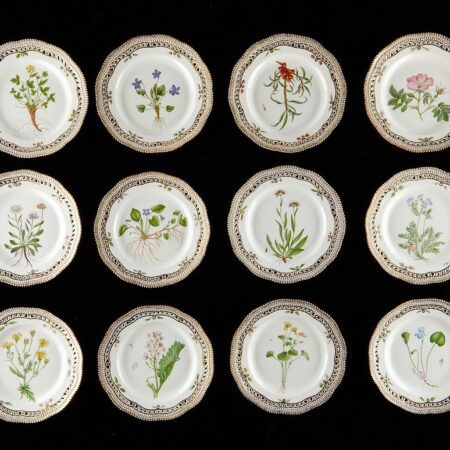
Set of 12 Flora Danica Luncheon Plates
Sold $7,500
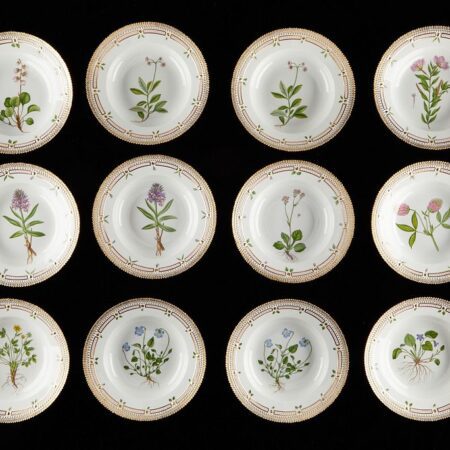
Set of 12 Flora Danica Flat Rim Soup Plates
Sold $7,000
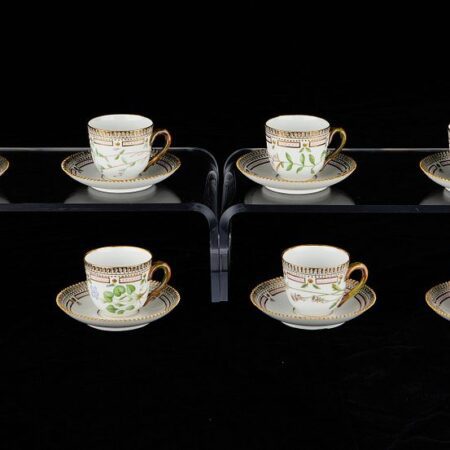
Set of 8 Flora Danica Demitasse Cups & Saucers
Sold $4,300
Prices include buyer's premium. Results above ranges typically follow strong provenance.
Get an Estimate
Have Flora Danica dinnerware you're thinking about selling?
Free, specialist-led estimate in five to seven business days. No fee, no obligation.
Request a Free Auction Estimate →